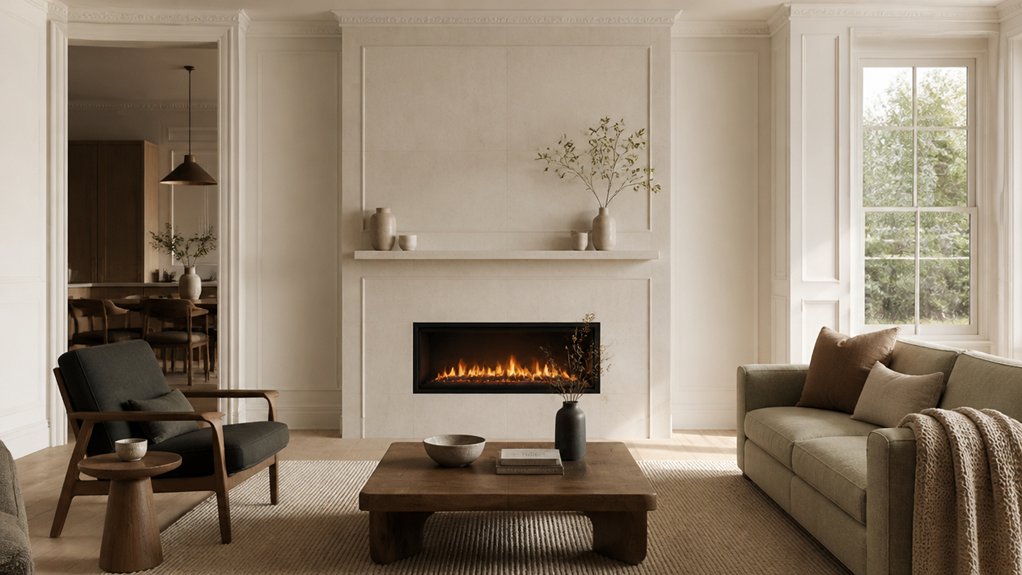
A fireplace can anchor a modern room with the warmth and character of an older home—even when your renovation has no chimney. You can choose from electric, ethanol, and gas models that offer flexible placement and convincing flame effects, but each brings different needs for heat, installation, and operation. Before settling on a style, consider what your home can safely support and which details will make the fireplace feel built in rather than added on.
Compare Fireplaces That Need No Chimney
When a renovation has no chimney, you still have several ways to bring fireplace charm into the room. Your best fit depends on the atmosphere you want, the room’s layout, and how you’ll use the feature.
Electric fireplaces offer flexible placement and convincing flame effects, with models ranging from sleek inserts to traditional mantels. They provide visual warmth without combustion, making them a practical choice when you value simplicity and broad design options.
Ethanol fireplaces create real flames and suit contemporary interiors, though you’ll need to account for fuel handling, ventilation, and operating costs. Gas fireplaces can deliver steady heat and a more classic flame, but they require an approved fuel connection and careful attention to local codes.
Compare these ventless options by heat output, upkeep, and fireplace aesthetics. The right choice should complement your renovation without overwhelming its design.
Choose and Install the Right Fireplace
Choose your fireplace by balancing the room’s design with practical needs: measure the available space, decide whether you want ambiance or supplemental heat, and check fuel access and local installation requirements. Then select a style that complements your renovation, from a streamlined wall-mounted unit to a sculptural freestanding model.
Compare flame quality, heat output, controls, and operating costs, considering how each option will feel in daily use. Confirm the chosen fireplace fuel suits your home and that you can access it conveniently. Before ordering, review the manufacturer’s specifications for dimensions, weight, mounting needs, and installation clearance around walls, furniture, and finishes.
Hire a qualified installer when the unit requires specialized connections or mounting. Plan the placement around sightlines and seating, and coordinate finishes with surrounding materials for a cohesive focal point. Don’t let installation details compromise the room’s design.
Check Safety, Ventilation, and Local Codes
Before installation, confirm that your fireplace meets local building and fire codes, including rules for clearances, venting, and permits. Requirements vary by appliance and jurisdiction, so check with your building department and ask your installer to verify specifications before work begins.
Safety considerations include approved materials, protected surfaces, and required distances from combustible finishes and furnishings. Don’t assume an electric or vent-free model is exempt from regulations; each type may have distinct restrictions.
Ventilation requirements depend on the fireplace’s fuel and design. Gas units may need a direct vent or adequate air supply, while electric models still require proper electrical capacity and safe wiring.
Hire licensed professionals for gas connections, electrical work, and vent installation. Keep documentation, inspection records, and manufacturer instructions on hand to support safe operation and future maintenance.
Plan Fireplace Placement and Finishes
Once safety requirements are clear, decide where the fireplace will anchor the room and how its finishes will complement the renovation. Thoughtful fireplace placement shapes circulation, sightlines, and furniture arrangements. Position the unit where you can enjoy its warmth and visual presence without blocking pathways or competing with windows, built-ins, or a focal view. In an open-plan space, use it to define a seating zone; in a compact room, consider a corner installation to preserve usable floor area. Check that the chosen location suits the appliance’s clearances and installation requirements.
Then compare finish options against your home’s architecture and palette. A crisp plaster surround can soften a contemporary interior, while brick, stone, or tile adds texture and a classic note. Coordinate the hearth, mantel, and trim for a composed, intentional look.