
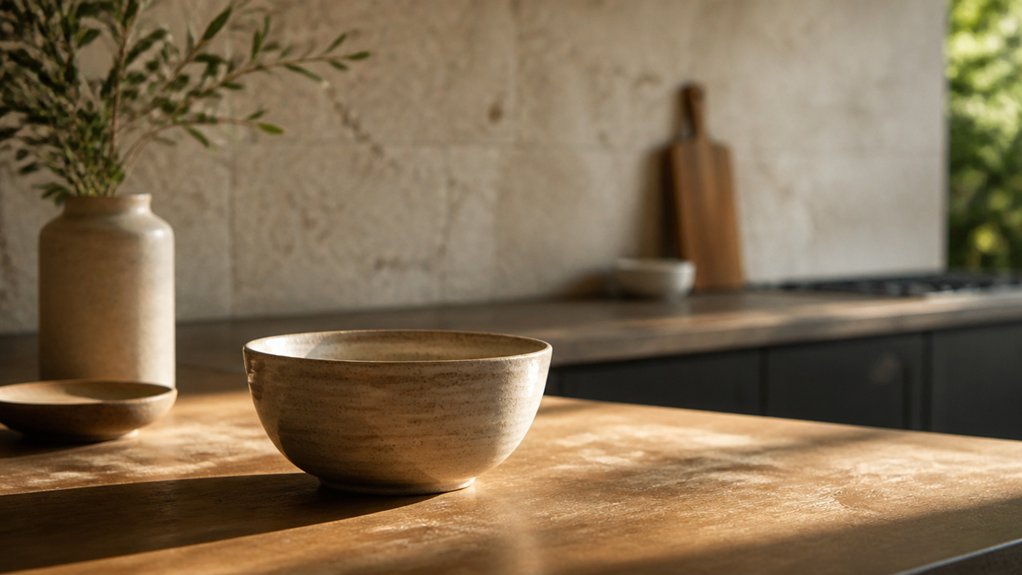
When you choose wood, stone, leather, or natural textiles, you’re choosing surfaces that change with use. Their tones deepen, edges soften, and small marks begin to tell the story of your home. Synthetic finishes may promise consistency, but wear can make damage conspicuous—and replacement more likely. Natural materials can reward care with lasting character and less waste. The difference becomes clearest in the rooms and routines you live with every day.
Why Natural Materials Gain Character Over Time
Why do natural materials grow more compelling with age? Because they register use without surrendering their integrity.
When you choose materials shaped by nature, you invite subtle variation into your rooms: grain, mineral shifts, and tactile irregularities that make a surface feel considered rather than manufactured. These details create patina contrasts with crisp, contemporary forms, lending a space depth without adding visual clutter.
You’ll also avoid common aging myths: wear doesn’t automatically mean damage, and consistency doesn’t always signal quality. A well-chosen natural finish can adapt to daily life, making small marks part of a larger, coherent story.
That evolving character helps you keep furnishings longer, resist disposable trends, and reduce replacement waste. Instead of demanding permanence, you gain beauty that rewards attention, use, and time.
How Wood, Stone, and Leather Develop Patina
Wood, stone, and leather develop patina in distinct ways: wood deepens or softens in color as sunlight and touch reach its grain; stone gains a gentle sheen where hands and feet polish its surface; leather grows supple, darkens, and records creases at points of use. You’ll notice these changes gather around daily rituals: a chair’s worn arms, a limestone threshold, a well-used bag’s softened handle. Such Patina development makes each surface specific to its setting, not merely old. You can preserve that character with attentive cleaning and occasional care, while accepting small marks as evidence of use. Natural aging rewards materials with depth that manufactured uniformity can’t replicate. Choosing durable wood, stone, and leather also helps you keep useful pieces longer, reducing replacement and letting their evolving beauty remain part of your home.
How Natural and Synthetic Finishes Age
Natural finishes tend to change with their materials: oil and wax let wood develop a richer tone, while stone sealers may wear unevenly at thresholds and countertops. You’ll see these shifts as a natural patina, not a flaw: light, touch, and routine care gradually shape each surface.
Synthetic coatings often aim to hold a uniform color and sheen, but scratches or chips can expose a contrasting layer, making repairs conspicuous. Some require stripping and recoating rather than simple renewal, adding material use and waste. Choose a finish with the maintenance you’ll realistically provide. Oil and wax need periodic attention; durable sealers can reduce upkeep, though they may alter stone’s feel or appearance. When you value aging texture over factory consistency, you can select finishes that remain repairable and let time show honestly.
Where to Use Natural Materials at Home
Where will natural materials make the biggest difference? Start where you touch, gather, and unwind. In the living room, choose linen upholstery, wool rugs, and timber furniture; their soft textures bring depth without visual noise. A dining table in solid wood gives daily meals a durable, welcoming center, while stone counters lend kitchens quiet permanence.
In bedrooms, cotton, wool, and unfinished wood create restful layers that feel grounded rather than staged. Let warm palettes—clay, oak, and muted greens—connect these materials across rooms. In bathrooms, use stone or handmade tile selectively, pairing tactile surfaces with a subtle gloss from glazed ceramic to catch light.
You don’t need to replace everything. Prioritize high-use pieces and enduring surfaces, then balance them with reclaimed or responsibly sourced materials. The result feels personal, coherent, and built to live with you.
How to Care for Materials That Age Well
A little routine care helps natural materials develop character without wearing out prematurely. Dust wood with a soft cloth, and clean spills promptly with a barely damp one; harsh cleaners can strip protective oils and dull the grain. Use coasters on stone, but don’t expect every mark to disappear—some patina belongs to the material’s story.
For leather, vacuum seams and condition sparingly with a product suited to its finish. Rotate rugs to even out sunlight and foot traffic, and blot stains rather than rubbing them deeper. These care tips preserve function while letting texture and color evolve. Set aging expectations before you buy: timber may darken, brass may mellow, and linen may soften. Choose finishes you can repair, maintain them gently, and keep useful pieces in circulation for years.