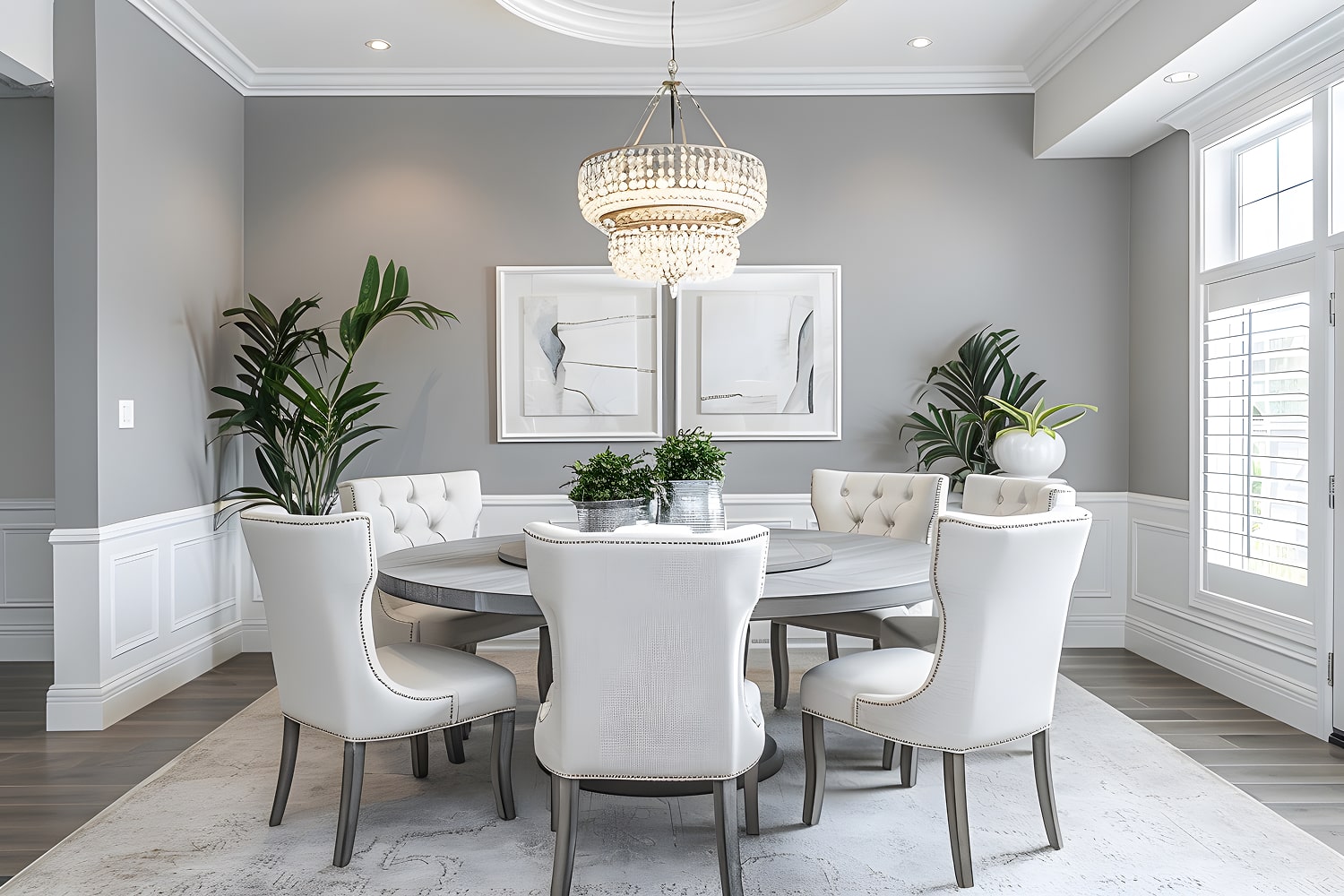
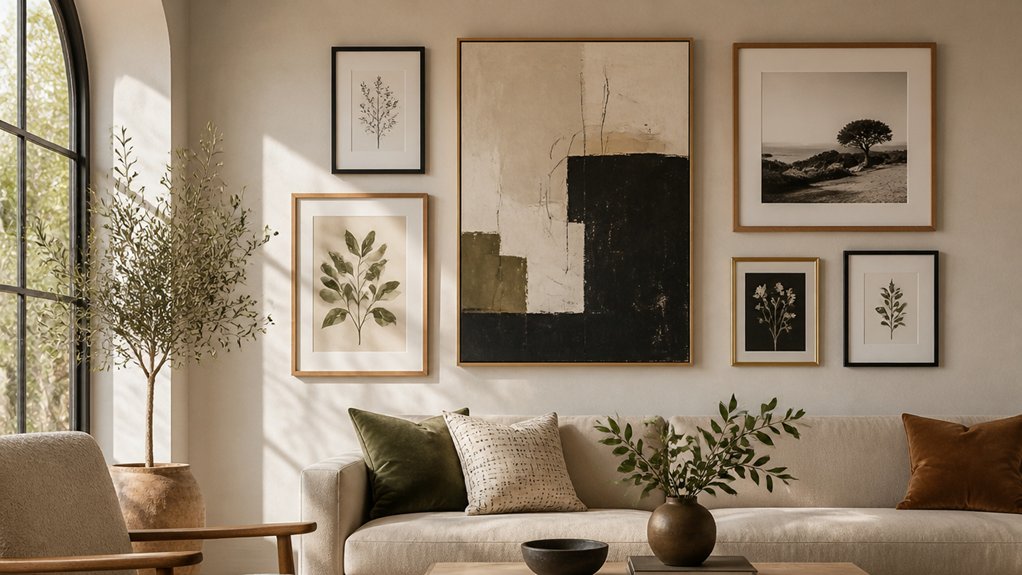
Your walls are a canvas, and each piece of art changes the room’s story. To create a display that feels intentional, consider your wall’s dimensions, the room’s purpose, and the light before choosing artwork. Then plan the arrangement, select frames that support each piece, and hang everything at a comfortable height. A few careful decisions can turn a collection into a focal point—but one common spacing mistake can throw off the entire composition.
Choose Art That Fits Your Wall and Room
Start by measuring the wall and considering how the room is used. Choose artwork that suits the available space and supports the room’s purpose. A quiet landscape may help a bedroom feel restful, while a bold abstract can energize a living area. Check the piece’s dimensions against the wall and nearby furniture so it feels appropriately scaled without overwhelming the space.
Use color theory to connect the artwork with your existing palette. You can echo a dominant shade for cohesion or introduce a contrasting hue for emphasis. Consider the room’s lighting, too; natural and artificial light can change how colors appear throughout the day.
Select framing techniques that complement both the artwork and your interior. A simple frame can keep a detailed piece from feeling busy, while a wider mat can give a smaller work more presence.
Plan a Balanced Wall Art Arrangement
A balanced arrangement begins with a clear focal point, such as the largest or most visually striking piece. Place it near eye level, then build around it with smaller works. Before hanging anything, arrange the pieces on the floor or cut paper templates to test the layout. This simple step helps you adjust spacing and scale without extra holes.
For effective art placement, consider the wall’s shape and the furniture below it. Keep the grouping centered over a sofa or console, and leave consistent gaps between works. You don’t need identical spacing everywhere, but deliberate variation should feel intentional. Distribute visual weight across the display by balancing larger pieces with smaller ones and mixing orientations. Step back often to assess the composition from the room’s main viewing points. When the arrangement feels cohesive, mark positions and hang each piece securely.
Choose Frames That Complement Your Art
Once your layout feels balanced, choose frames that support each piece without competing for attention. Let the artwork guide your decisions: a slim, understated frame can sharpen a detailed print, while a broader profile may suit a bold painting. Consider frame materials in relation to both the art and your room. Wood adds warmth, metal offers a crisp, modern edge, and painted finishes can echo a color already present in the image.
Matting choices also shape how a piece reads. A generous, neutral mat gives a small work breathing room; a colored mat can emphasize a subtle hue, but use it sparingly. For a cohesive gallery, repeat one finish or profile across varied works, or keep a consistent color palette while varying frame styles. Protect delicate art with archival materials and UV-filtering glazing, especially in bright rooms. Choose quality that fits your budget and the piece’s needs.
Hang Wall Art at the Right Height
Where should wall art sit for the most comfortable view? As a reliable starting point, position the artwork’s center about 57 to 60 inches above the floor. This height placement suits many rooms because it aligns with the average viewer’s eye level. Adjust for your household, though: if you’re taller, shorter, or often seated in the space, test the view from where you’ll actually enjoy the piece.
When hanging art above furniture, leave roughly 6 to 10 inches between the frame’s bottom edge and the furniture’s top. This connection helps the artwork feel anchored rather than isolated. For a gallery wall, treat the group as one composition and center its overall arrangement at eye level. Before drilling, mark the planned position with painter’s tape, then step back and check the eye level alignment from the room’s main viewing area.