Updating a historic house means balancing modern comfort with the details that give it character. Before you touch the wiring, plumbing, or HVAC, document original millwork, plaster, tile, and built-ins, then check local preservation rules. You’ll also need to plan discreet routes for new systems and choose materials that won’t trap moisture. The key decisions often begin where you least expect them: behind a wall, beneath a floor, or inside a closet.
Assess Your Historic Home and Local Rules
Before planning upgrades, determine what your historic home can support and which rules apply. Start with a careful survey of its age, construction, alterations, and condition. Note original materials, significant rooms, and character-defining details, then gather deeds, old photographs, and prior permits to clarify what’s changed.
To assess local codes, contact your building department and local historic preservation commission before commissioning designs. Ask whether your property is individually designated, lies in a historic district, or faces review requirements for exterior work. Confirm which permits, inspections, and approvals apply, and document guidance in writing.
You should also investigate historic preservation incentives, including tax credits, grants, or low-interest loans. Eligibility may depend on designation, project scope, qualified expenses, and approval before work begins. Verify current criteria with local and state preservation offices.
Plan System Upgrades Around Original Features
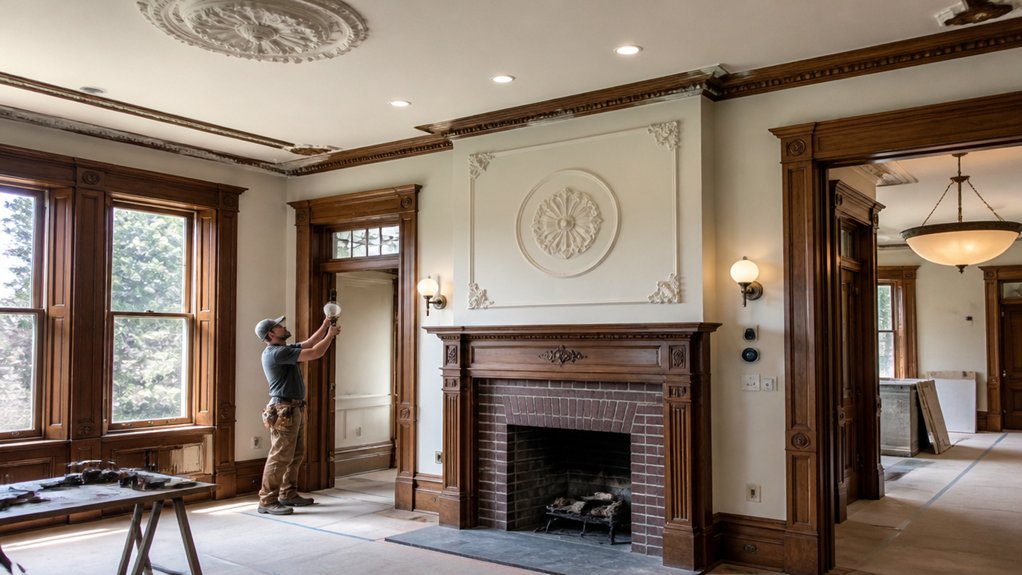
Plan mechanical, electrical, and plumbing upgrades around the features that give your historic house its character. Before settling on routes or equipment locations, map original millwork, plaster, tile, decorative ceilings, and built-ins. Note which elements you can’t alter and where discreet access may be possible. This early coordination helps you protect sightlines and avoid cutting through defining details.
Work with your architect and preservation-minded contractors to compare options against the home’s layout and historic fabric. You might conceal service paths in closets, secondary spaces, or existing chases, while keeping visible rooms visually calm. Consider how grilles, controls, fixtures, and access panels will read beside original finishes. Aim for design balance, not imitation: new components should feel deliberate without competing with historic work. Careful planning supports feature retention and leaves room for practical, well-integrated improvements.
Update Old-House Wiring, Plumbing, and HVAC
Updating old-house wiring, plumbing, and HVAC starts with a clear picture of what’s there. Have licensed specialists inspect circuits, pipes, and equipment before you set a scope. Their findings help you prioritize safety, capacity, and efficiency while limiting unnecessary disruption to original layouts.
When upgrading wiring, plan for today’s electrical loads, grounded outlets, and discreet routes through closets or existing chases. Modern plumbing can improve water pressure and reliability; choose pipe paths that avoid prominent rooms and protect historic framing. For updating hvac, compare compact ducted systems with ductless options, considering noise, room-by-room comfort, and equipment placement.
Coordinate trades early so new lines, vents, and access points don’t compete for the same spaces. You’ll preserve design intent more effectively when system choices respond to the house’s proportions, construction, and daily use.
Repair Finishes and Preserve Historic Details
Once the new systems are in place, repair finishes with methods that respect the house’s age and craftsmanship. Document original materials before work begins, then match plaster texture, wood species, trim profiles, and paint sheen as closely as you can. Use breathable lime-based plaster and compatible coatings where appropriate; modern sealants can trap moisture and damage historic fabric.
When you uncover old wallpaper, hardware, or millwork, assess its condition before removing anything. Repair rather than replace sound elements, and retain tool marks and gentle wear that give rooms their character. If a detail needs rebuilding, use surviving examples as templates and keep new work distinguishable on close inspection.
Coordinate finish repairs with electricians and plumbers, so access panels, vents, and fixtures sit discreetly without obscuring the features you want to preserve details.