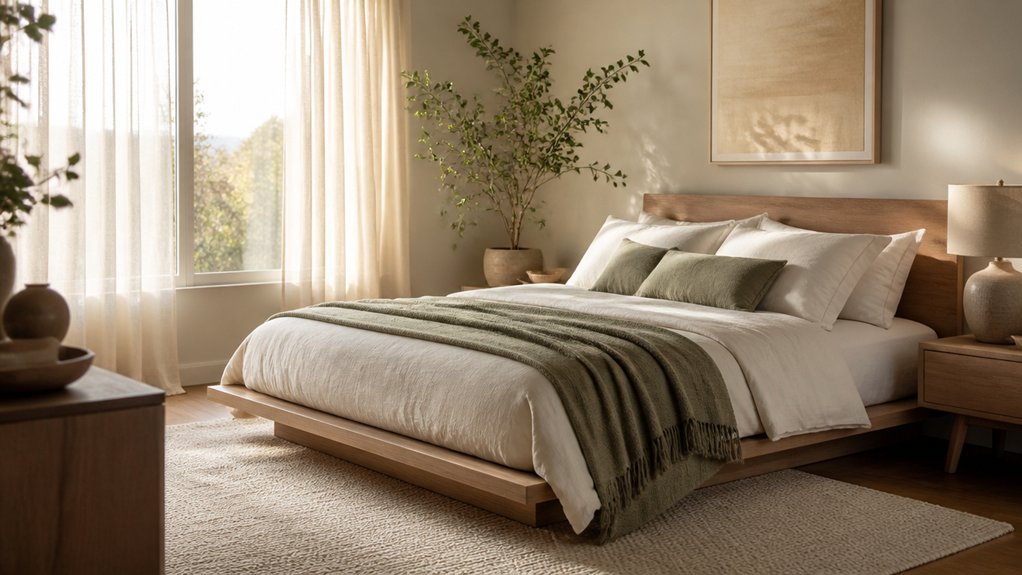
Morning light settles across a clear bedside table, while soft layers invite you to slow down. You can shape your bedroom into a sanctuary by arranging furniture for easy movement, choosing calming colors, and balancing ambient and task lighting. Thoughtful textures and simple wellness rituals can make daily routines feel more restorative. The most effective changes often begin with one overlooked detail—one that can transform how your room supports rest.
Arrange Furniture for a Calm, Clutter-Free Bedroom
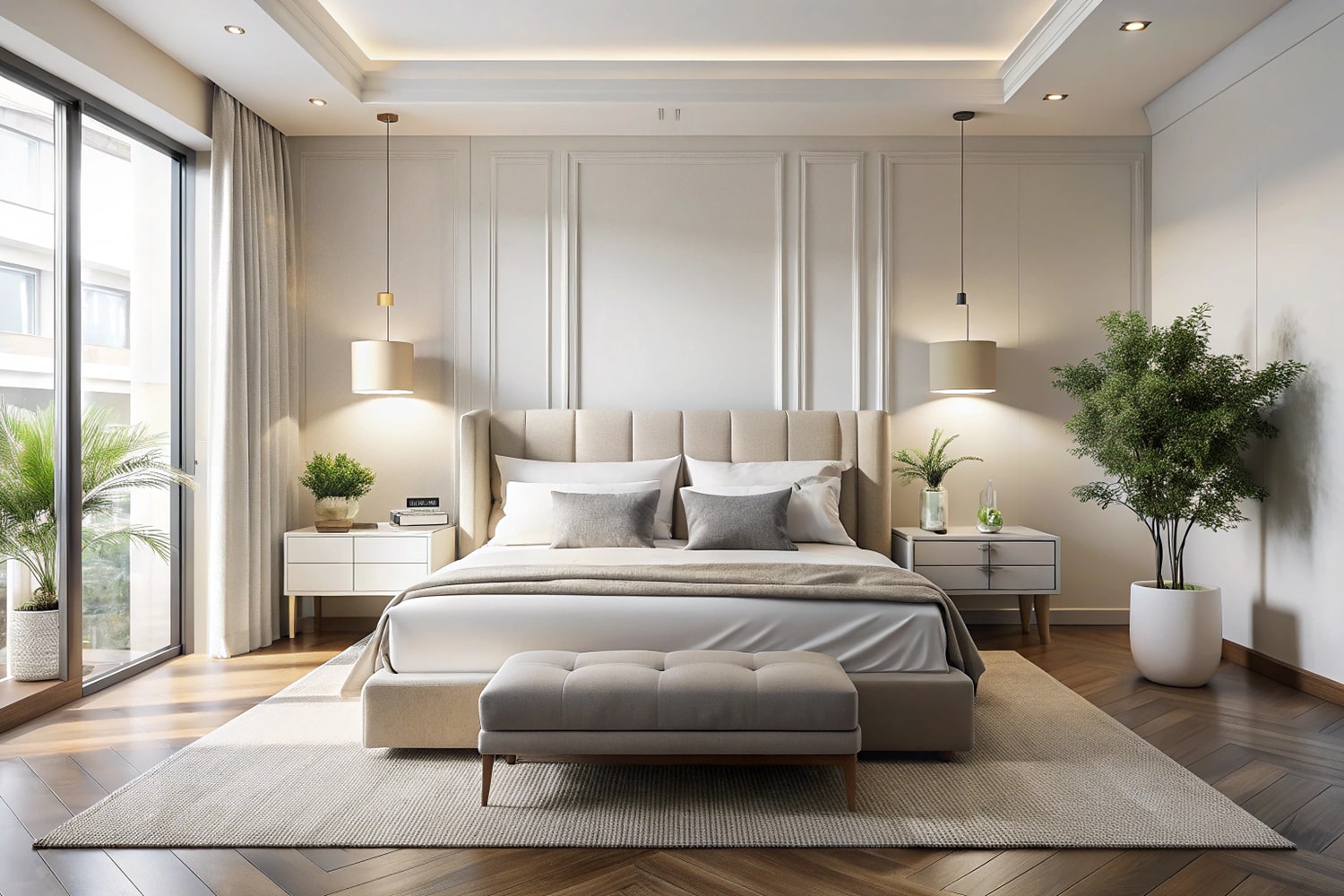
A calm bedroom begins with furniture arranged to support easy movement and a clear visual flow. Position your bed where you can approach it from both sides, while keeping the doorway and windows unobstructed. This placement creates balance and helps you navigate the room without weaving around obstacles.
Choose furniture that fits the room’s scale. A compact nightstand or wall-mounted shelf can provide practical storage without crowding the bedside. Keep frequently used items within reach, and assign less-used belongings a closed cabinet or closet. These choices support clutter free layouts and let architectural details take focus.
Consider how furniture shapes the room’s overall impression. A consistent arrangement can complement calming color palettes without making color the main feature. Leave open floor space around key pieces, and remove anything that interrupts circulation. You’ll create a bedroom that feels orderly, spacious, and easier to maintain.
Choose Calming Colors for a Restful Bedroom
Color can shape how restful a bedroom feels, so choose hues that soften the room rather than compete for attention. Build calming color palettes around muted, low-contrast shades such as sage, dusty blue, warm gray, or soft clay. These colors create a composed backdrop without making the space feel flat.
For soothing wall tones, consider how natural materials and existing furnishings will look against the paint. A warm neutral can complement wood and woven textures, while a cool, subdued hue can balance richer finishes. You don’t need to use one color everywhere: carry a main shade through larger surfaces, then add restrained variations in bedding or artwork. Test paint samples at different times of day, and choose the option that feels comfortable and cohesive with your bedroom’s overall design.
Use Layered Lighting to Wind Down
Once your color palette feels settled, layered lighting can help the bedroom shift from daytime activity to evening rest.
Start with ambient light from a ceiling fixture, then add bedside lamps for focused reading. Choose dimmable controls so you can lower brightness as night approaches, rather than relying on one harsh overhead source. A warm glow from bulbs in the 2700K range creates a calmer atmosphere and complements restful wall colors.
Place task lights where you need them, and aim shades away from your eyes to reduce glare.
You can also use a small accent light to highlight artwork or architectural details without brightening the entire room. Keep switches easy to reach from the bed, so you can adjust the mood comfortably and end the day with a gradual, soothing transition.
Layer Soft Textures for Better Rest
Soft textures make a bedroom feel more inviting while adding comfort to your nightly routine. Choose restful materials that feel pleasant against your skin, such as breathable cotton sheets, linen duvet covers, or a wool throw. Layering these fabrics gives your bed visual depth and lets you adjust warmth as the seasons change. You can also place a soft rug beside the bed to cushion your first steps in the morning and soften the room’s overall look.
Balance tactile variety with a calm palette and a few well-chosen layers. Too many heavy fabrics can trap heat or make the space feel crowded, so consider your climate and preferred sleep temperature. When you select soft textures for bedding and nearby surfaces, you create a more comfortable setting that supports relaxation without sacrificing a clean, considered design.
Add Personal Touches That Support Daily Wellness
Personal touches can make your bedroom feel more restorative when they reflect routines that help you unwind. Choose objects that support your personal rituals, such as a journal beside your bed, a reading lamp with warm light, or a tray for evening tea. Keep these items visible but organized, so they invite use without adding visual clutter. A framed photograph or meaningful artwork can also create a sense of comfort, especially when its colors complement your room’s palette.
Consider scent routines as another wellness cue. A diffuser, linen spray, or small dish of dried botanicals can help signal that it’s time to relax. Select subtle scents you enjoy, and use them consistently rather than layering fragrances. By connecting thoughtful details with everyday habits, you’ll shape a bedroom that feels personal, balanced, and supportive of rest.