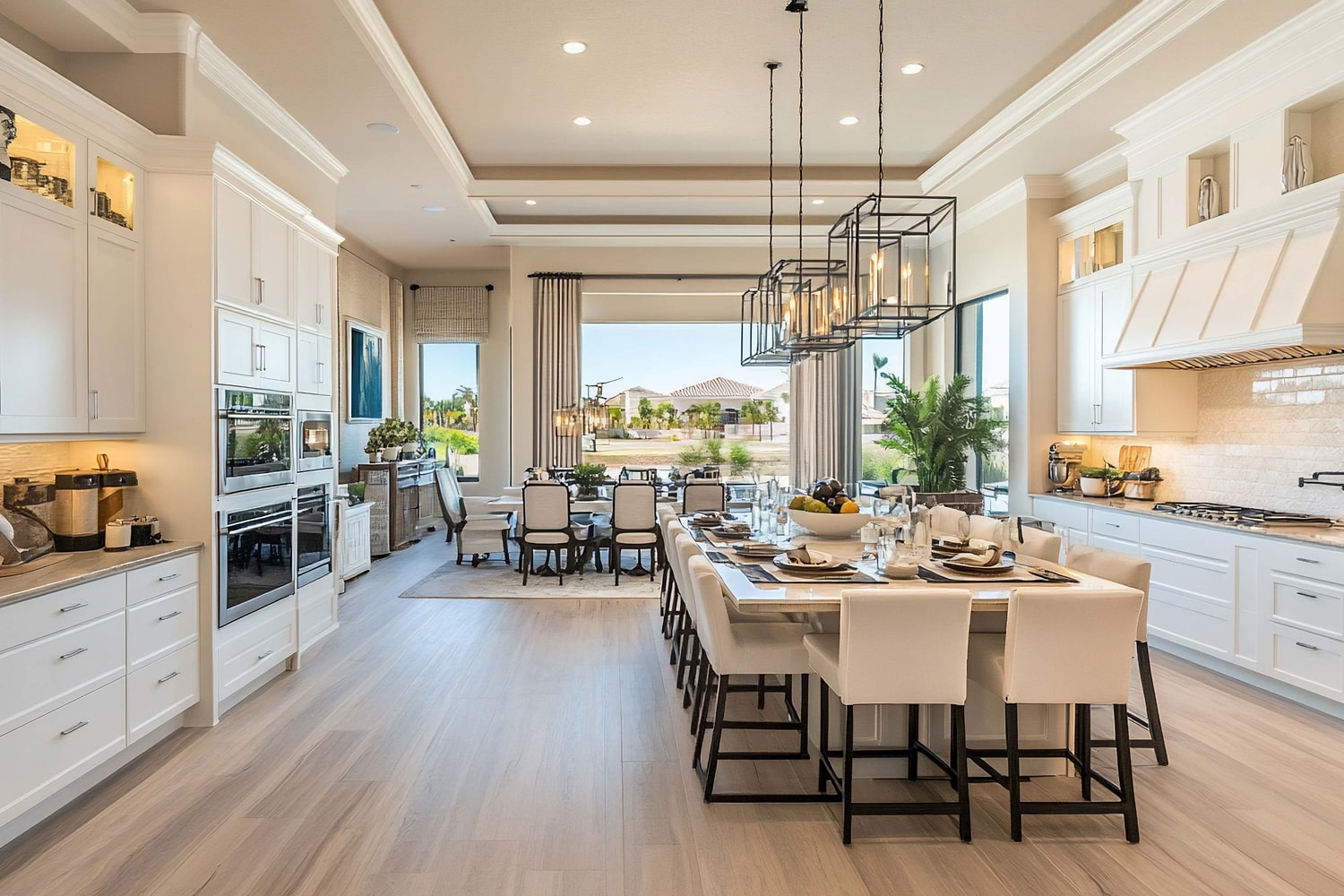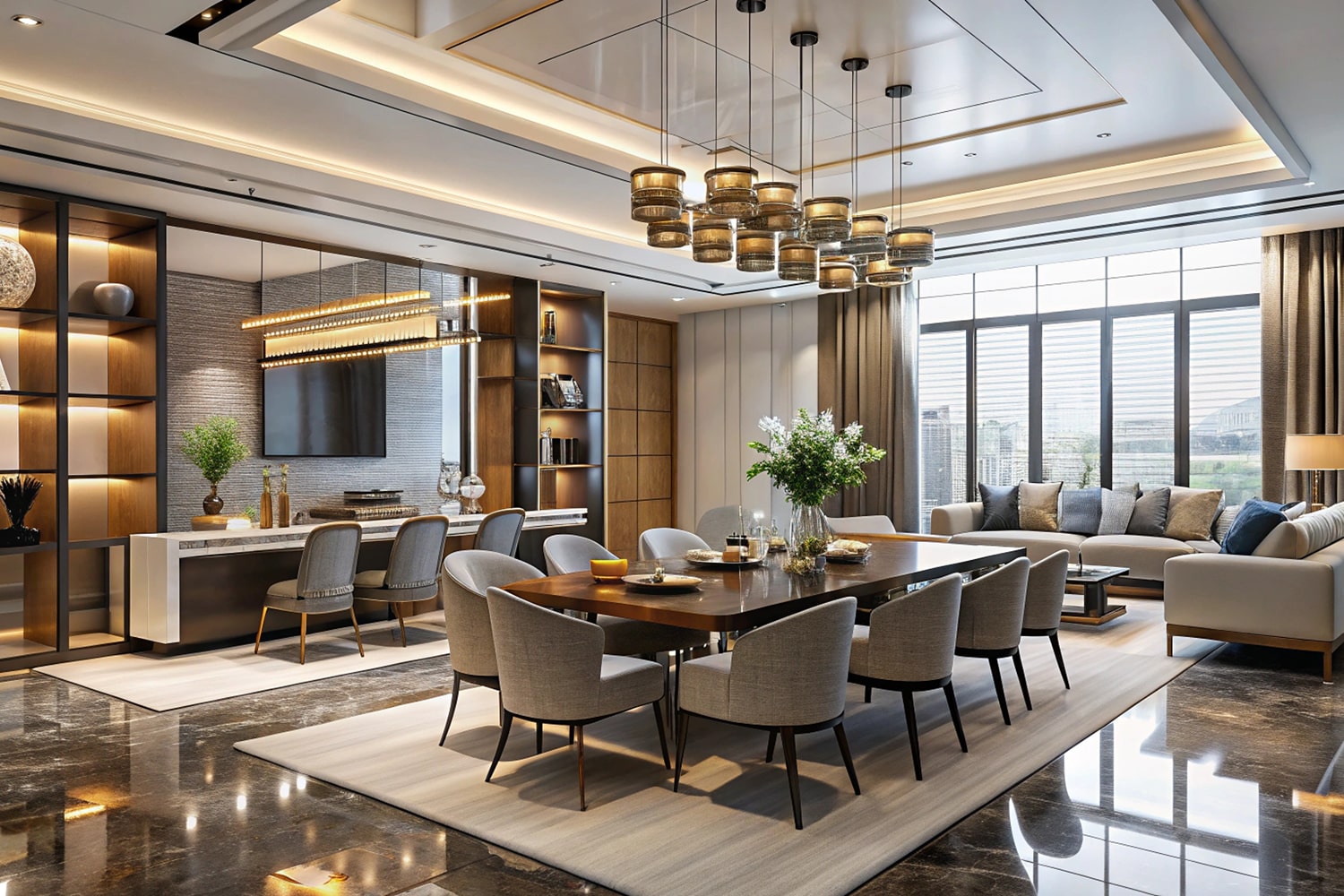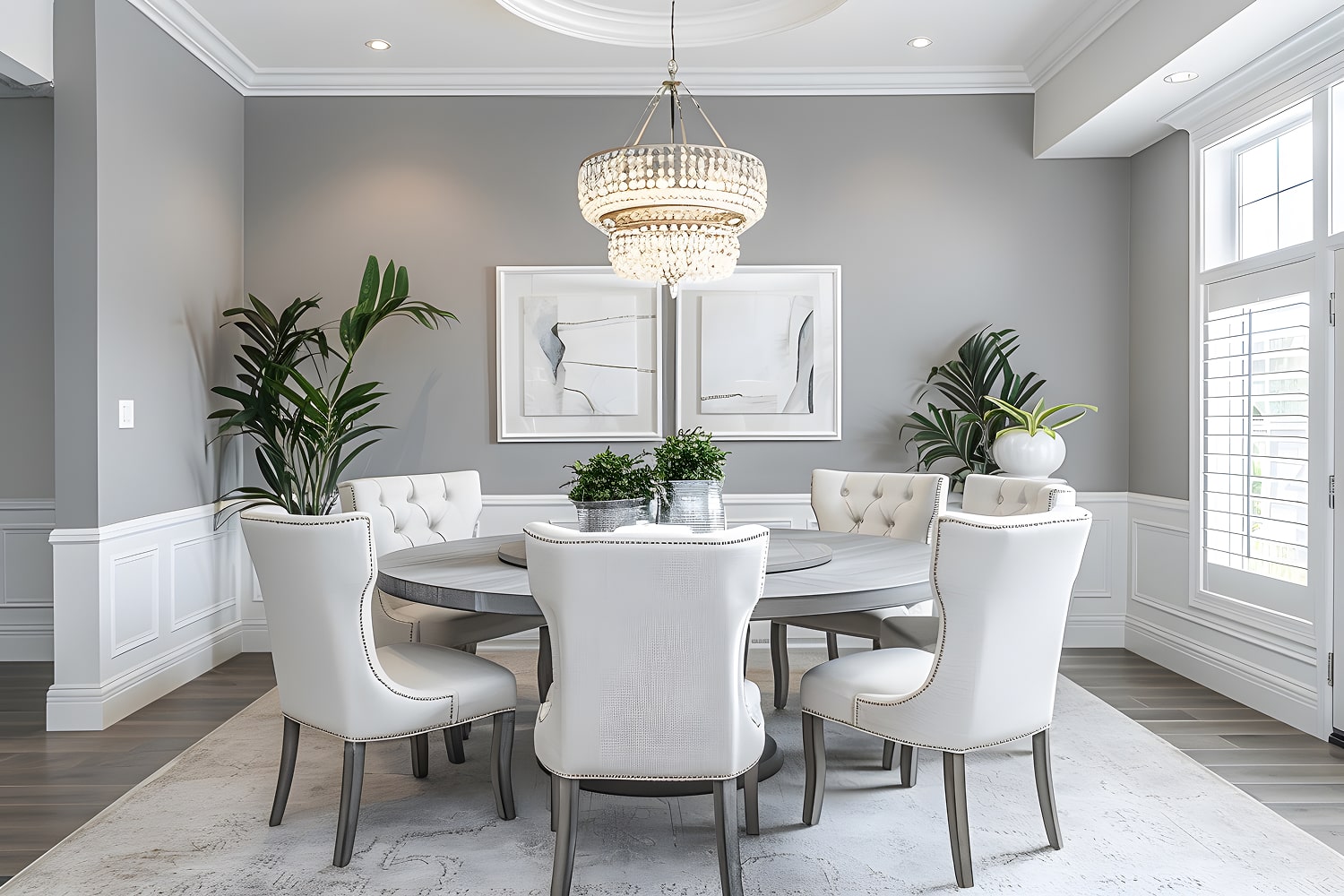
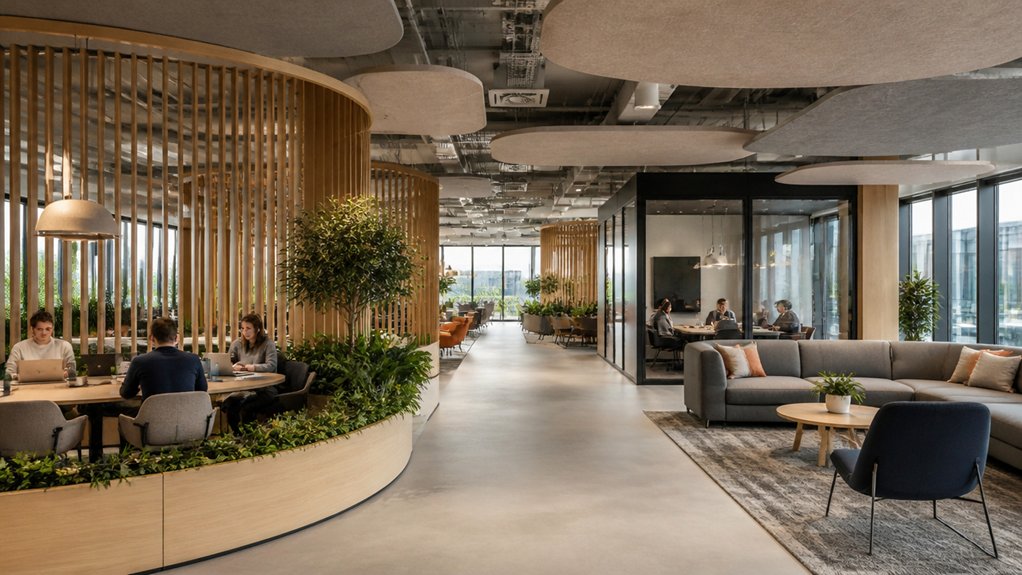
You may not realize that a busy workspace can feel noisy even when sound levels are moderate, because hard surfaces and poor sightlines make conversations harder to follow. You can improve comfort by pairing clear routes with focused work zones, upholstered seating, and sound-absorbing finishes. Keep meeting areas off main paths, but connected to team spaces. The challenge is balancing easy interaction with quiet—and a few design choices can make the difference.
Design for Better Acoustics and Collaboration
How can a workspace support lively collaboration without letting conversation overwhelm everyone nearby? You can shape sound through thoughtful design elements, not just add barriers after noise becomes a problem. Choose sound-absorbing ceiling panels, upholstered seating, and wall finishes that reduce reverberation, so voices stay clearer and less tiring. Position collaborative tables away from quiet work areas, and use screens or partial enclosures to soften speech without cutting people off. Small meeting rooms give teams a place for longer discussions, while shared spaces can support brief exchanges. Consider how sound travels across hard surfaces and open sightlines; a lively conversation can carry farther than you expect. When you balance audibility with acoustic privacy, you help people collaborate comfortably, hear one another, and stay focused on their work without raising their voices.
Plan Zones for Focus and Easy Movement
Where people work matters as much as how the space sounds. Use focus zoning to separate quiet tasks from lively collaboration. Place individual desks away from meeting rooms, reception points, and busy circulation paths, so passing conversations don’t interrupt concentration. Keep shared tables and discussion areas near one another, where teams can connect without carrying noise across the floor.
Map the routes people take between entrances, workstations, storage, and amenities. Clear, direct paths improve movement efficiency and reduce interruptions around seated workers. Avoid routing foot traffic through focus areas; instead, use perimeter walkways or natural boundaries to guide movement. Give each zone enough room for people to enter, leave, and gather without blocking others. Check sightlines, too: you’ll want colleagues to find shared spaces easily while preserving a sense of separation for focused work. Observe how people actually move, then adjust the layout.
Choose Workplace Acoustic Materials
Choose materials by considering how sound moves through each zone. In open collaboration areas, you can use acoustic ceiling panels, wall absorbers, and upholstered furnishings to reduce reflections and support reverberation control. Select finishes that suit the room’s size, ceiling height, and activity level; a lively workshop needs different absorption than a quiet work lounge.
Choose acoustic materials that suit each zone’s size, ceiling height, and activity level to control reflections and reverberation.
In meeting rooms, place absorptive materials near hard surfaces where speech reflections build, while keeping surfaces durable and easy to maintain.
For focused desks, consider screens or soft-backed elements that temper nearby chatter without making the space feel closed off. You can add sound masking to create a steadier background where conversations remain audible but less distracting.
Check material ratings, fire requirements, and cleaning needs, then review the room with users to confirm comfort, clarity, and fit.
Connect Team Spaces Without Spreading Noise
After selecting absorptive materials, plan how teams move and interact between spaces without carrying noise into focused areas. Place shared hubs along circulation routes, not beside quiet rooms, so conversations stay where people expect them. Use thresholds, short corridors, or storage zones as acoustic buffers between lively and focused settings. You can keep sightlines open with glazed partitions while adding seals and absorptive finishes to limit sound transfer. Arrange meeting rooms near project areas, and provide small breakout spots for quick exchanges instead of letting discussions spill into work aisles. Clear wayfinding helps people choose the right setting without interrupting others. Design for moderated collaboration: support easy access and spontaneous contact, but give each activity a defined acoustic boundary. These choices create concise soundscapes that help teams connect while protecting concentration.