A cast iron radiator can do more than warm your room; its ribbed profile brings weight, texture, and a sense of permanence to the architecture. When you choose its proportions, placement, and finish with care, you can make it feel integral to the space rather than an afterthought. But its sculptural presence must still work with heat output, clearances, and circulation—and that balance begins with the radiator itself.
Choose a Cast Iron Radiator That Fits Your Room
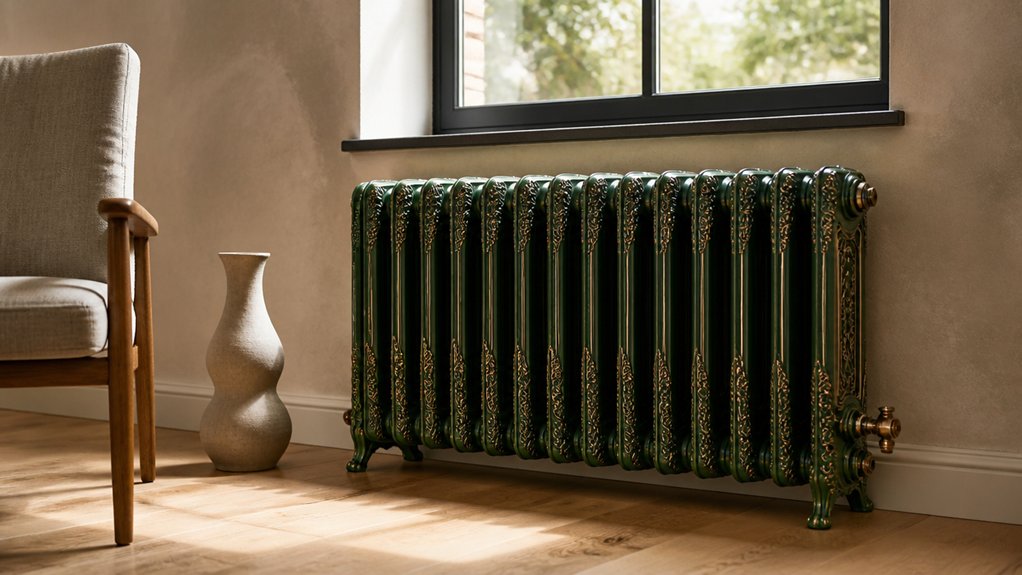
Before choosing a cast iron radiator, consider how it will occupy the room: its height and width, its position beneath a window or along a wall, and the space needed for circulation. Then choose radiator proportions and detailing that complement the room’s architecture, from restrained, finely spaced columns to a more sculptural, substantial profile. A painted finish can echo trim or introduce a deliberate contrast, while the iron’s weight and texture lend permanence to the composition. Check radius compatibility with your pipework and valves so the radiator integrates cleanly rather than appearing forced into place. Consider heat distribution in relation to the room’s openings and furnishings, and favor a model whose form supports comfortable, even warmth. The right choice becomes a stylistic upgrade: a functional object with presence, finish, and architectural coherence.
Size and Place Your Radiator for Efficient Heating
How large should your radiator be, and where should it sit? Begin with your room’s heat loss, ceiling height, window area, and insulation; a heating professional can calculate the required output in BTUs. Match that figure to a radiator’s rated capacity, not simply its width or the number of sections. Thoughtful size placement supports energy efficiency while keeping the iron’s substantial form in proportion to the room.
Set the radiator beneath a window when practical. Rising warmth counters cold downdrafts, while the unit anchors the wall without interrupting circulation. Leave clear space around it so heat can move freely; don’t hide its mass behind deep furniture or heavy curtains. Check pipe routes, floor strength, and access before installation. In a compact room, a tall, narrow profile may preserve usable wall space; in a broad room, distribute heat where you need it most.
Choose a Color and Finish for Your Radiator
Color turns a cast iron radiator into either a quiet architectural detail or a deliberate focal point. Choose color options in relation to the room’s palette and the radiator’s visual weight. A wall-matched shade lets its sculptural profile recede, while deep green, oxblood, or a crisp contrast gives the iron a more assertive presence. Consider how daylight shifts each hue across the ribs and ornament.
Finish textures shape the way the surface catches light. Satin softens reflections and suits a restrained interior; gloss sharpens the radiator’s contours and recalls traditional enamel. A matte finish lends the metal a quieter, contemporary character, though it may reveal dust more readily. Use a coating formulated for radiators, so heat won’t compromise its appearance. Test your chosen shade on a small area first; the cast iron’s depth can make color read differently than a flat sample.
Arrange Furniture Around Your Radiator
Where you place furniture determines whether a cast iron radiator reads as sculpture or disappears behind the room’s furnishings. Give it breathing room: leave clearance around the ironwork so heat can circulate and the radiator remains accessible for cleaning and maintenance. Don’t push a sofa, cabinet, or upholstered chair directly against its warm surface; fabrics can trap heat, while tight spacing makes the room feel cramped.
To arrange seating, consider the radiator’s footprint and the paths people take through the room. Angle a chair nearby or position a sofa across from it, keeping a comfortable passage between furniture and metal. In a narrow space, choose pieces with open legs or a shallow profile to preserve visual and physical space. Measure before moving anything, then adjust the arrangement to optimize layout without blocking airflow or circulation.
Style Your Cast Iron Radiator as a Focal Point
Once the furniture gives your cast iron radiator room to breathe, let its sculptural form anchor the space. Treat its ribbed profile as architectural relief, and keep nearby surfaces quiet so the iron’s depth and shadow remain legible. A restrained wall color can sharpen its silhouette; a saturated backdrop can make its finish feel more dramatic. Choose a palette that connects the radiator to other materials in the room, such as darkened steel, aged brass, or warm timber.
You can also highlight its craftsmanship with a considered finish. Matte paint emphasizes contour, while polished metal reveals texture and light. If restoration is appropriate, explore traditional metalworking techniques to preserve detail. Rather than chasing passing design trends, select a treatment that suits your home’s proportions and lets this functional object command attention without overwhelming the room.