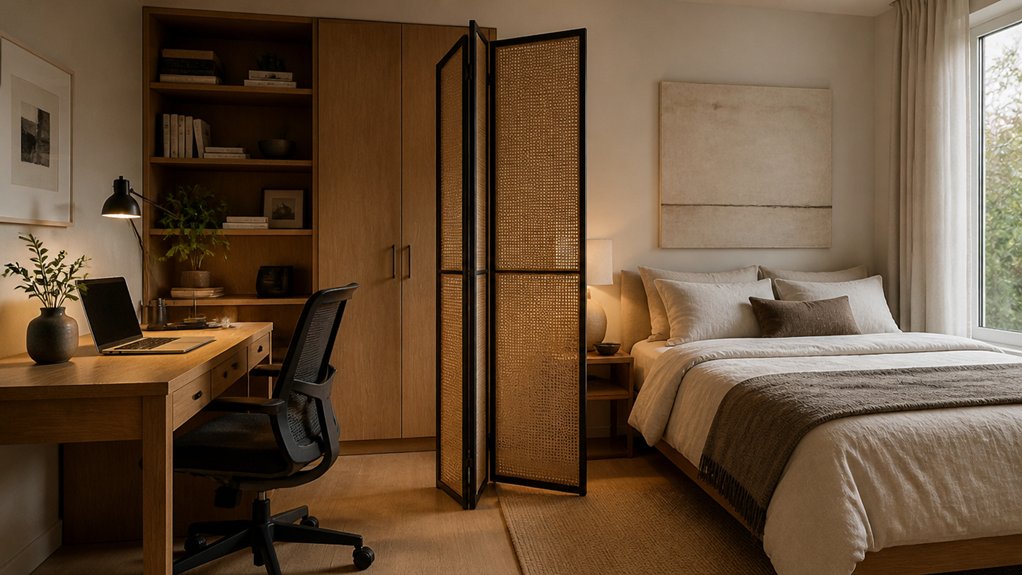
Your guest room can work like a well-packed suitcase: every item earns its place, yet comfort stays intact. With a slim desk near natural light, smart storage, and furniture that shifts from work to sleep, you can make one small room serve two purposes without feeling crowded. The key is planning clear zones and an easy daily reset—and a few layout choices can make all the difference.
Plan Your Guest Room Office Layout
Start by mapping the room’s fixed features—doors, windows, closets, and outlets—then place the desk where it gets natural light without blocking pathways. Choose a slim desk with drawers or shelves to keep supplies close and the floor clear. Position your chair so you can pull it out easily, and add a task lamp for cloudy days. Use vertical space for wall shelves, a pinboard, or a narrow bookcase rather than crowding the desktop. Designating zones helps you organize work essentials and keep the room visually calm; define them with lighting, a small rug, or furniture placement. When choosing multifunctional textiles, look for a washable rug and curtains that soften the room without overwhelming it. Finish with a cable tray and a few coordinated accessories for a polished, practical layout.
Separate Work and Guest Areas
Create a clear boundary between work and guest zones so each feels intentional. Position your desk near a window or wall, then define the sleeping area on the opposite side. A rug, contrasting wall color, or slim screen can mark the transition without crowding the room. For space saving, use a curtain track or folding divider that you can open when guests need more floor area. Keep work materials contained behind cabinet doors or in labeled bins, so your office doesn’t dominate the room during a visit. Add privacy zones with thoughtful placement: angle the desk away from the bed, and use a screen to shield calls or computer glare. If the room has a closet, reserve one section for office supplies and another for guest linens. Clear boundaries help both uses feel calm and considered.
Choose Furniture for Work and Sleep
Once the work and guest zones are defined, choose furniture that serves both without making the room feel crowded. An expandable desk gives you a compact surface for daily tasks and more room when projects demand it. Pair it with a slim chair that tucks neatly beneath the desk, keeping the floor open for guests.
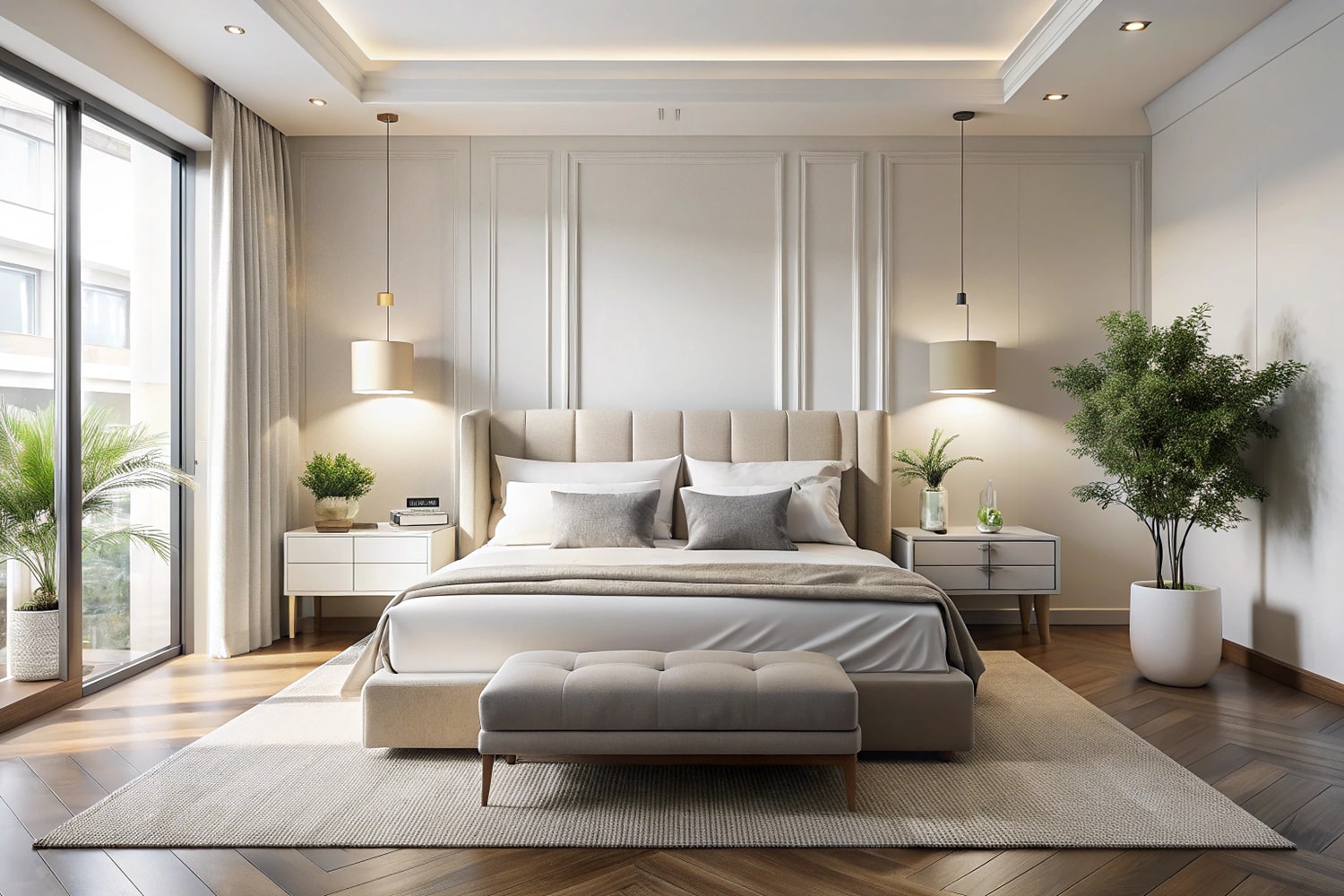
For sleeping, choose a comfortable bed that fits the room’s proportions, such as a daybed or a streamlined platform bed. Multi functional seating, like an upholstered bench or a sleeper chair, can offer a place to sit during work hours and extra sleeping space when visitors stay. Look for clean lines, durable finishes, and colors that complement your decor. Each piece should feel intentional, work smoothly in both modes, and leave enough breathing room to move around.
Store Office Gear and Guest Essentials
Where can office supplies and guest essentials go when every inch counts? Give each category a dedicated, compact home. A desk with drawers can hold chargers, notebooks, and pens, while labeled bins keep smaller supplies easy to find. Use a slim cabinet or rolling cart to store clutter without sacrificing valuable floor space; choose a finish that complements the room’s decor.
Reserve a shelf or basket for fresh towels, extra bedding, and toiletries, so guests can settle in comfortably. Place it within easy reach, but keep work materials separate to make both functions feel intentional. Wall-mounted shelves free up the floor, and under-bed containers can hold less-used items. Measure storage before buying, and favor pieces that fit the room’s scale. Thoughtful organization helps you maximize efficiency while keeping the space polished and welcoming.
Reset the Room Between Work and Visits
How quickly can you switch the room from workday to welcome? A simple reset routine makes the change feel effortless. At day’s end, file papers, tuck your laptop and chargers into labeled Storage, and clear the desktop. Keep a small basket nearby for items you’ll need tomorrow, so Organization doesn’t take over the room.
Before guests arrive, fold the office chair beneath the desk or move it aside, then add fresh bedding and a folded throw. A tray can turn the desk into a nightstand; a compact lamp softens the light without crowding the surface. Choose pieces that support both tasks, and your Design will feel intentional rather than improvised. Finish by checking pathways and adjusting the temperature. With a few repeatable steps, you’ll protect Comfort for visitors and make Monday’s work setup easy to restore.