In a period home, radiators can either interrupt the room’s character or reinforce it. You can conceal it behind a radiator cover with generous airflow, or let its original profile stand out with a finish that echoes the surrounding trim. The right choice depends on your room’s proportions, the radiator’s condition, and how you use the space. A few practical details can make either approach feel intentional—and keep the heat flowing.
Choose Your Radiator Cover or Styling Approach
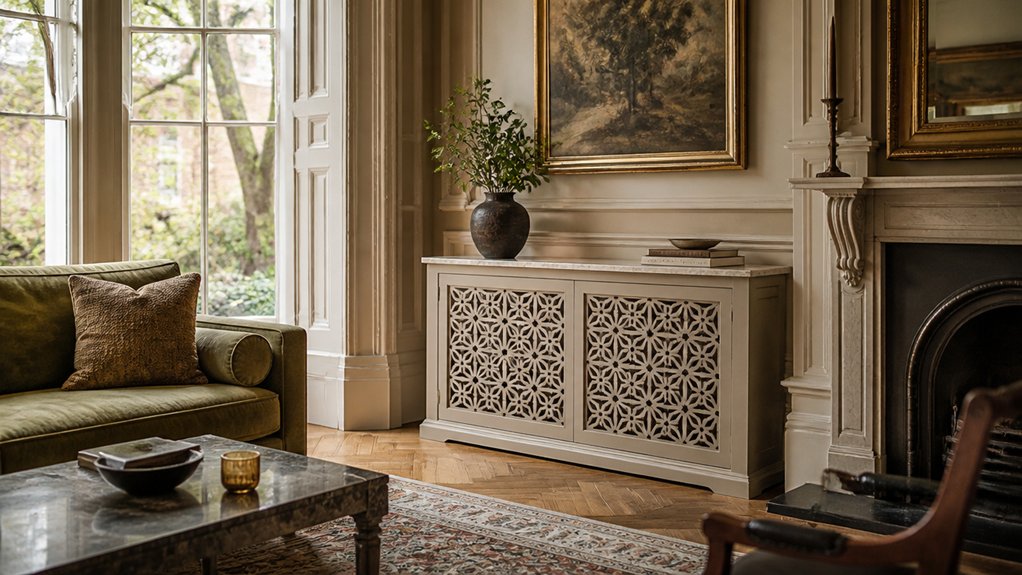
Should your radiator disappear into the room or become part of its character? Your answer depends on the effect you want and how much visual attention the space can handle. Choose a cover when you’d like to soften a bulky unit, add a useful shelf, or create a calmer backdrop. Look for sturdy construction and generous openings; creative venting keeps heat circulating while the cover protects airflow.
If your radiator has elegant curves or distinctive detailing, let it show. A fresh coat of heat-resistant paint can make it feel intentional, while a nearby console or carefully chosen artwork helps frame it without hiding it. You can also introduce vintage accents through portable accessories, such as a small table or lamp. Weigh function, maintenance, and room scale before deciding.
Match Radiator Covers to Period Trim
To make a radiator cover feel at home in a period room, echo the trim rather than compete with it. Look closely at your skirting boards, architraves, and window casings: their profiles offer cues for the cover’s edges, paneling, and proportions. You don’t need an exact replica; a simple molded top or recessed panel can create a thoughtful link to the period trim without making the room feel overly formal.
Match the cover’s finish to your existing woodwork for a seamless effect, or choose a complementary shade to give the radiator a quieter outline. Check that the cover’s depth and height sit comfortably beside nearby trim, and leave adequate airflow around the unit. These measured choices improve radiator aesthetics while keeping the cover practical and in scale with your room.
Make Exposed Radiators a Room Feature
If a cover would interrupt the room’s character, let the radiator show and make it part of the design. Treat its shape and finish as details worth repeating. A vintage radiator with ornate columns can anchor a period scheme; pair it with a simple wall color that lets its profile stand out. If you’ve got a sleek, wall mounted model, emphasize its clean lines with restrained furnishings and a carefully chosen paint color.
Use nearby accessories to connect the radiator to the wider room. Echo its metal finish in picture frames, lamps, or cabinet hardware, or place a narrow console beside it to create a composed vignette. Keep the surrounding area visually calm, so the radiator reads as an intentional feature rather than an afterthought. A considered palette and balanced arrangement can make even a practical fixture feel distinctive.
Keep Radiator Covers Safe and Heat-Efficient
How can you keep a radiator cover looking polished without trapping heat or creating a hazard? Choose a design with generous openings across the front and a clear gap above the radiator. These details let warm air circulate while preserving the period room’s visual balance.
Before installation, check the radiator’s manufacturer guidance and keep the cover away from valves, pipes, and combustible fabrics. Don’t use the top as a shelf for books, candles, or delicate objects; heat can damage them, and clutter can block airflow. Secure the cover so it won’t tip, especially in busy rooms.
A well-fitted cover supports insulation efficiency by limiting unnecessary drafts around the unit, but it shouldn’t wrap the radiator in insulation. For heat loss reduction, seal window gaps and insulate external walls instead, then monitor room comfort and adjust the cover if heating feels uneven.