In a high-end condo, privacy depends on more than a quiet address: hallway noise, shared walls, windows, and everyday routines can all expose weak spots. Start by noting when and where sound travels, then match upgrades to the source, from dense insulation and isolated ceilings to rugs, acoustic curtains, and better door seals. Before work begins, check building rules and permit needs. The right solution depends on a detail many owners overlook.
Diagnose Noise and Privacy Gaps in Your Condo
Before investing in soundproofing, identify how noise enters your condo and where privacy falls short. Track when you hear hallway conversations, elevator chimes, plumbing, traffic, or sounds from neighboring units. Note whether they travel through the entry door, shared walls, ceilings, floors, windows, or ventilation openings. Keep a brief log that records each noise source, its timing, and the rooms where it’s most noticeable. This helps you distinguish occasional disturbances from recurring patterns.
Then assess privacy gaps in daily routines. Can visitors see into your living area when the door opens? Do conversations carry from a home office into shared spaces or the corridor? Check sightlines, door seals, and how sound moves between rooms. Pay special attention to bedrooms and work areas, where unwanted visibility or overheard speech can disrupt comfort and confidentiality.
Choose Soundproofing Upgrades for Your Condo
Once you’ve identified where noise enters, choose upgrades that address those specific paths. For airborne sound, add dense insulation inside shared walls or ceilings, then finish with resilient channels and extra drywall to limit vibration. If impact noise travels from above, consider an isolated ceiling system; confirm its depth and weight suit your building before proceeding. Seal gaps around pipes and outlets with appropriate acoustic products, and ask a qualified contractor to assess concealed routes.
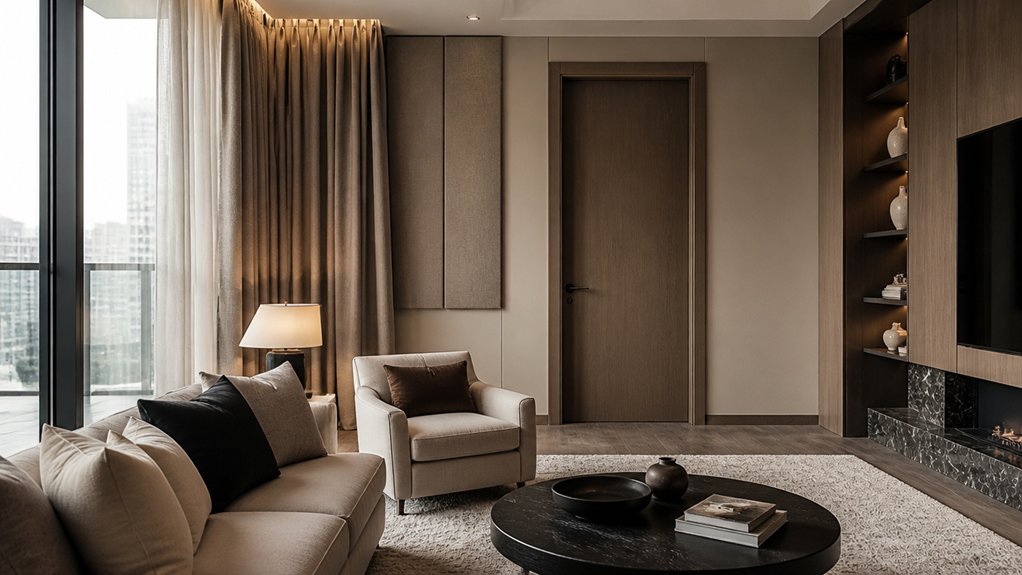
For a lighter intervention, layer soundproofing fabrics into your furnishings: thick rugs, upholstered pieces, and acoustic curtains can absorb reflections and soften everyday noise. Select materials that complement your interior palette, and check their tested performance rather than relying on appearance alone. Combine targeted construction with these softer treatments to improve comfort without overbuilding. Review condo rules and consult building management before scheduling any work.
Improve Condo Privacy With Windows, Doors, and Screens
For street-facing windows or a glass entry door, layered treatments can protect your privacy without making a condo feel closed off. Pair sheer curtains with lined drapes so you can soften daylight by day and block views at night.
For a cleaner profile, choose top-down shades that preserve natural light while screening eye-level sightlines.
If you’re replacing glazing, consider frosted or textured panels in bathrooms and entry areas; improved glass acoustics can also reduce street noise, though privacy and sound control depend on the full assembly.
At the entry, a solid-core door and tight-fitting seals limit both visibility and sound leakage. Add a decorative screen or privacy gates where your layout allows, creating a discreet buffer without crowding circulation. Choose finishes that complement your interior, and make each treatment easy to adjust for changing light, views, and daily routines.
Plan Installation Around Condo Rules and Building Limits
How can you protect a condo’s quiet and privacy without running afoul of building rules? Start by reviewing your association’s alteration guidelines, house rules, and renovation procedures before scheduling work. Ask management whether window treatments, door replacements, acoustic seals, or privacy screens require planning permissions or written approval. Confirm who can authorize changes to exterior-facing elements, shared walls, and common areas; these may fall outside your unit’s control.
Next, check building limits on work hours, contractor access, elevator use, deliveries, and debris removal. Give your installer the rules in writing, and obtain any required insurance certificates or permits. Discuss the schedule with management and affected neighbors, especially if drilling or other noisy work is necessary. A clear plan reduces neighbor impact, prevents avoidable delays, and helps you preserve privacy while respecting the building’s standards.
Compare Upgrade Costs, Benefits, and Trade-Offs
Which upgrade offers the best return depends on the noise you’re trying to control, your budget, and what the building allows. For street noise, well-sealed windows or interior storm panels can deliver noticeable relief, though replacement windows often carry higher upgrade costs and may require approval.
For conversations passing through shared walls, added insulation and resilient channels can improve separation, but installation is disruptive and results depend on the existing assembly.
Solid-core doors, perimeter seals, and door sweeps usually cost less and address hallway noise; they won’t solve sound traveling through walls or ceilings.
Acoustic curtains and rugs offer modest, reversible gains with minimal installation.
Compare expected privacy benefits with maintenance, usable space, and visual impact. Ask contractors for assembly-specific estimates, then prioritize the weakest sound path rather than choosing the most expensive product.