You may not realize that the best indoor-outdoor connection often begins with the path sunlight takes through your home. When you align rooms, glass doors, and garden views, you can make each transition feel natural and keep daylight moving through the space. The right patio materials and a few well-placed plants help carry that calm outdoors in. But one overlooked layout choice can leave the whole connection feeling disjointed.
Plan a Layout for Indoor-Outdoor Living
How might your home feel more connected to nature? Begin with a plan that lets rooms relate naturally to the landscape, sunlight, and one another. Use layout zoning to give each area a clear purpose while keeping the overall flow calm. Place dining or lounge spaces near garden views, and position quieter rooms where trees or planted courtyards offer a restful outlook. Consider how daylight moves across your home throughout the day; arrange work, reading, and gathering areas to make the most of gentle, useful light. Outdoor alignment can guide the placement of interior furniture, pathways, and focal points, creating a visual rhythm between inside and outside. Keep circulation simple, so you can move easily between activities and enjoy changing views without cluttering the plan. Aim for balance, openness, and comfort.
Choose Glass Doors for Light and Easy Access
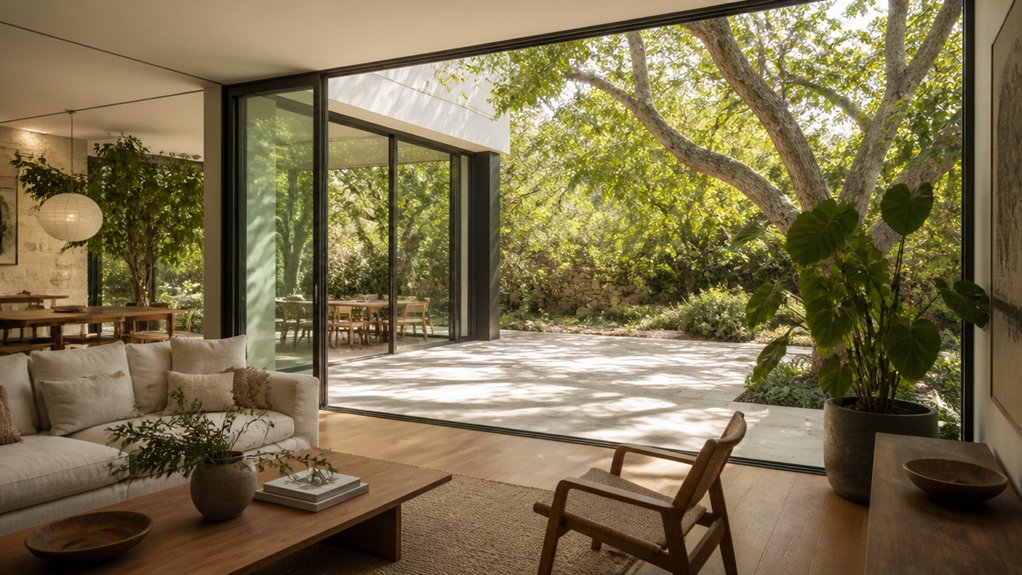
Choose glass doors to draw daylight deeper into your home and make the garden feel within reach. Wide panes give you generous light access, revealing shifting leaves and changing skies while brightening rooms that might otherwise feel enclosed.
Select doors that suit your layout: sliding panels save space, while folding doors can open a broader passage. Clear sightlines help your living area feel connected to the landscape, even when the doors are closed.
For smooth outdoor integration, align the opening with the room’s natural path and keep nearby furniture from blocking it. You’ll create easy indoor flow without crowding the threshold. Consider glazing that limits heat gain and glare, so sunlight stays welcome through the day. Slim frames preserve views, while a secure, well-sealed fit keeps comfort steady in every season.
Create a Patio That Feels Like an Extension
Let the patio continue the home’s rhythm with flooring, colors, and furnishings that echo the adjoining room. Choose durable surfaces in a similar tone, so the threshold feels less like a boundary and more like a gentle shift. Aesthetic transitions work best when you repeat a few interior details outdoors without making the spaces identical.
Consider how daylight moves across the patio throughout the day. Arrange seating to catch soft morning light or enjoy evening shade, and keep pathways clear so your gaze can travel naturally beyond the doors. Material textures, from smooth paving to woven outdoor upholstery, add depth while keeping the palette calm and connected. Select pieces scaled to the patio, leaving room to move comfortably. With thoughtful proportions and visual continuity, you’ll create an inviting outdoor room that feels rooted in the home and open to its surroundings.
Bring Nature Indoors With Plants and Natural Materials
As daylight shifts through your home, indoor plants and natural materials can strengthen its connection to the outdoors. Place indoor plants near windows, where changing light supports growth and frames garden views. Use lighting strategies that complement daylight without harsh glare, and arrange foliage to guide the eye between connected rooms.
Pair timber, stone, and woven fibers through thoughtful texture pairing, choosing sustainable finishes that echo your patio’s palette. Cross ventilation helps refresh these spaces, while biofiltration from healthy leaves can support cleaner indoor air. Consider acoustic design, too: leafy clusters and natural textiles soften reverberation without blocking circulation.
Protect surfaces with sensible moisture control, and make greenery maintenance part of your routine. Add scent integration through herbs, then adjust seasonal color plans with blooms or foliage that keep your interior feeling connected to nature.